Beverly Hills has always been synonymous with luxury, innovation, and forward-thinking lifestyle choices. Now, the city of 90210 is cementing its position as Southern California's leader in sustainable luxury living. With electric vehicles rapidly becoming the standard for discerning homeowners, Beverly Hills is experiencing an infrastructure revolution that's transforming how residents power their lives.
Bonnie Hyde, a top Chinese Beverly Hills realtor agent with deep expertise in luxury properties throughout Los Angeles, has witnessed this transformation firsthand. "The conversation around luxury real estate has fundamentally shifted," Bonnie Hyde explains. "Five years ago, buyers asked about square footage and finishes. Today, they want to know about EV charging capabilities, solar readiness, and sustainable features before they even schedule a showing."
Beverly Hills: The EV Capital of Los Angeles
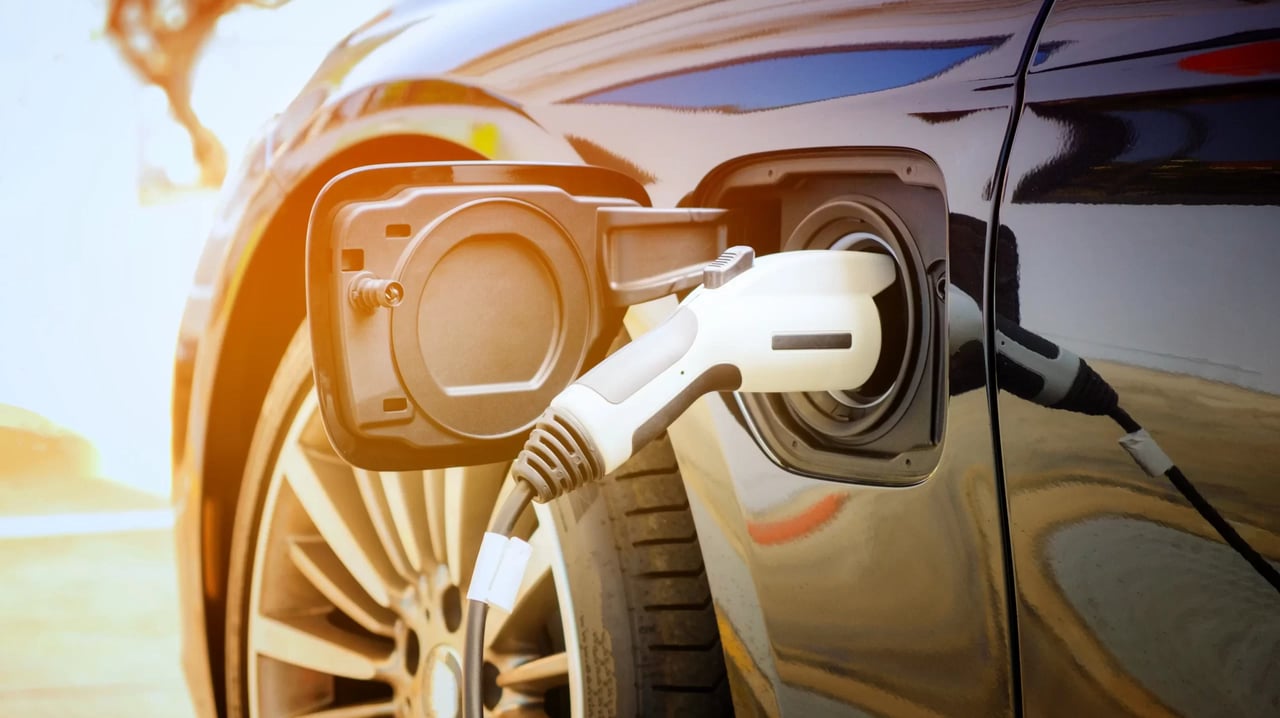
The numbers tell a compelling story. Beverly Hills currently features 123 public charging stations scattered throughout the city, with 23 offering complimentary charging to residents and visitors. This infrastructure didn't happen by accident. According to the city's parking service staff, Beverly Hills is committed to ensuring electric vehicle travel remains clean and convenient throughout their service area, with ongoing efforts to expand charging infrastructure as part of broader initiatives to improve air quality and livability.
These stations aren't tucked away in remote corners. They're strategically positioned at high-traffic locations where Beverly Hills residents already spend their time. The Beverly Hilton welcomes guests with robust charging options. The Peninsula Hotel offers premium charging services. Whole Foods Market on North Crescent provides convenient top-ups during grocery runs. Even the AKA Beverly Hills extended-stay residence has embraced the electric future.
"Location matters tremendously when evaluating properties," notes Bonnie Hyde, who consistently ranks as a top LA realtor. "Homes near existing charging infrastructure or with the electrical capacity for easy installation command premium prices. Smart buyers recognize this advantage."
For homeowners considering selling or evaluating their property's worth, the presence of EV charging capabilities can significantly impact valuation. Those interested in understanding how these features affect their home's market position can explore a comprehensive home valuation to see where they stand in today's sustainability-focused market.
The Celebrity EV Effect: When Hollywood Goes Electric
Beverly Hills has always been home to trendsetters, and the EV revolution is no exception. The Tesla Model S has become the unofficial car of Hollywood royalty, with an impressive roster of owners including Ben Affleck, Steven Spielberg, Katy Perry, Morgan Freeman, Eva Longoria, Will Smith, Cameron Diaz, and Demi Moore.
Leonardo DiCaprio, the United Nations Messenger of Peace on Climate Change, doesn't just talk about environmental responsibility—he lives it. DiCaprio owns both a Fisker Karma plug-in hybrid and a Tesla Roadster, setting an example for sustainable luxury that resonates throughout Beverly Hills and beyond.
George Clooney was among the first celebrities to embrace electric transportation, currently driving a Tango T600. His early adoption helped normalize EVs among the entertainment elite.
Perhaps no celebrity commitment illustrates the EV movement better than Katy Perry's remarkable gesture. Concerned about her tour's carbon footprint, Perry purchased Fisker Karma vehicles for each of her five assistants—a $500,000 investment in sustainable transportation that made headlines worldwide.
Robert Downey Jr. cruises Beverly Hills in his Audi e-tron GT, while automotive enthusiast Jay Leno maintains an impressive collection of electric vehicles, including a Tesla Roadster and a vintage 1909 Baker Electric.
"When clients see their favorite celebrities and business leaders investing in EV infrastructure, it validates their own decision to upgrade," observes Bonnie Hyde, recognized as a top Chinese realtor throughout Los Angeles. "These aren't just environmental statements—they're smart financial decisions that protect property values."
The Real Costs: What Beverly Hills Homeowners Actually Pay
For luxury homeowners considering EV charging installation, understanding the true costs is essential. Fortunately, the investment is far more accessible than many assume.
According to recent industry data, installing an EV charger at home costs an average of $963, with typical prices ranging from $551 to $1,379. However, comprehensive installations that include equipment, labor, and any necessary electrical upgrades generally fall between $1,000 and $3,500 for Level 2 chargers—the standard for residential properties.
Here's the breakdown Beverly Hills homeowners should expect:
Equipment costs range from $300 to $1,200 depending on features and brand reputation. Basic chargers deliver reliable performance, while premium models offer Wi-Fi connectivity, smartphone apps with cost tracking, voice assistant integration, and sleek designs that complement luxury home aesthetics.
Professional installation labor typically runs $400 to $1,500. Licensed electricians must ensure proper wiring, appropriate circuit breaker sizing, and code compliance—non-negotiable elements in Beverly Hills' strict building environment.
Electrical panel upgrades, when necessary, add $500 to $2,000 to the total investment. Many older Beverly Hills estates require panel modernization to support the amperage demands of Level 2 charging, but this upgrade also future-proofs the home for additional electric appliances and technologies.
Smart chargers with advanced connectivity features typically cost $100 to $300 more than basic models, but the added convenience and energy management capabilities justify the premium for most luxury homeowners.
"The installation cost is minimal compared to the property value in Beverly Hills," Bonnie Hyde points out. "We're talking about homes valued at several million dollars. A $2,500 investment in EV charging infrastructure isn't just practical—it's expected by today's buyers."
The Best Home EV Chargers for Beverly Hills Estates
Not all EV chargers deliver the same performance, reliability, or aesthetic appeal. Based on extensive expert testing and consumer reviews, several models stand out as ideal for Beverly Hills luxury properties.
The ChargePoint Home Flex earned recognition as the best overall home EV charger available today. It features charging speeds up to 50 amps, an excellent smartphone app with detailed cost tracking, and seamless Alexa compatibility for voice control. The sleek industrial design complements modern architectural styles prevalent throughout Beverly Hills.
Tesla's Universal Wall Connector represents a breakthrough for households with multiple electric vehicles. This innovative charger features an industry-first integrated J1772 adapter, allowing it to charge both NACS (Tesla's standard) and J1772-equipped EVs from other manufacturers. For Beverly Hills families with diverse vehicle preferences, this versatility proves invaluable.
The Emporia Pro offers budget-conscious luxury homeowners exceptional value without sacrificing smart features. It includes dynamic load management that prevents circuit overloads while maximizing charging speed—particularly useful in homes with multiple high-draw appliances.
JuiceBox 40/48 chargers deliver strong performance with comprehensive app control and intelligent scheduling, though potential buyers should note that parent company Enel X exited the U.S. market in 2024, which may affect long-term support.
For homeowners prioritizing durability in Southern California's varied climate, the Grizzl-E charger boasts superior weatherproofing with its NEMA 4X rating, ensuring reliable operation through whatever weather conditions LA occasionally delivers.
"The right charger depends on your specific needs," advises Bonnie Hyde. "Families with multiple EVs need different solutions than single-vehicle households. Smart features matter more to tech-savvy homeowners. These are conversations worth having before installation."
Government Incentives: Maximizing Your Investment
One of Beverly Hills' most compelling advantages for EV adoption is the remarkable array of government incentives available to residents. These programs can offset the majority—sometimes the entirety—of installation costs.
At the federal level, the IRS offers a 30% tax credit up to $1,000 on qualifying EV charger installations. This alone can reduce a $3,000 installation to an effective cost of $2,000.
California residents enjoy additional state and regional benefits. The South Coast Air Quality Management District provides $400 to $800 to offset Level 2 charger installation costs for qualified applicants. The Los Angeles Department of Water and Power offers up to $1,500 in rebates for qualified used electric vehicle purchases.
The California Clean Vehicle Rebate Program delivers even more substantial support, offering $1,000 to $7,000 for new zero-emission vehicle purchases depending on income levels and vehicle type. When combined with the federal EV tax credit of up to $7,500 for eligible vehicle purchases, the total available incentives can exceed $9,000.
"These incentives transform the economics entirely," Bonnie Hyde emphasizes. "What seems like a significant upfront investment becomes remarkably affordable—sometimes free—when you factor in available rebates and tax credits. Beverly Hills homeowners should absolutely take advantage of these programs."
For those exploring properties throughout Los Angeles' most prestigious neighborhoods, understanding which homes already have EV infrastructure or the electrical capacity for easy installation can streamline the buying process. Bonnie Hyde's curated property listings include detailed information about sustainable features and EV readiness.
Solar Integration: The Complete Sustainable Solution
While EV charging infrastructure represents one pillar of sustainable luxury living, solar energy completes the picture. Beverly Hills homeowners are increasingly combining rooftop solar installations with home EV chargers, creating closed-loop energy systems that power vehicles directly from the sun.
Solar installation companies have recognized Beverly Hills' commitment to sustainability. Solar Source specifically markets services to prestigious Los Angeles neighborhoods including Beverly Hills, Bel Air, Brentwood, and Pacific Palisades, noting that residents in these areas demonstrate strong commitment to environmental responsibility.
Real-world installations prove the concept works beautifully. One Beverly Hills home features a substantial 41.4kW solar power system—more than enough to power the residence and charge multiple electric vehicles simultaneously.
The economics make sense for luxury homeowners. California's abundant sunshine provides consistent energy generation. Net metering programs allow homeowners to sell excess power back to the grid. Combined with EV charging, solar installations can eliminate both electricity bills and gasoline costs—a compelling value proposition regardless of property value.
Research indicates that rooftop solar panels have historically been adopted primarily by wealthier homeowners who could afford installation costs. However, as prices have declined and financing options have expanded, the income profile of solar adopters continues to broaden.
"Solar and EV charging are natural complements," notes Bonnie Hyde, whose expertise as a top Chinese Beverly Hills realtor agent extends to understanding sustainable luxury features. "Beverly Hills buyers increasingly expect both. Properties with existing installations stand out in competitive markets."
Beverly Hills' Climate Action Vision
Beverly Hills isn't resting on its current infrastructure. The city has ambitious plans that will further cement its position as Southern California's sustainability leader.
Beverly Hills' Climate Action Plan includes comprehensive proposals for installing additional EV charging stations as part of the city's goal to reach carbon neutrality by 2045. This plan is currently moving through city council approval, with stakeholder input shaping the final implementation strategy.
While specific numbers for charging station expansion over the next one, five, and ten years weren't publicly available at publication, the trajectory is clear. Beverly Hills recognizes that robust EV infrastructure isn't just an environmental imperative—it's an economic development strategy that attracts residents, businesses, and visitors who value sustainability.
The plan addresses not just quantity but quality of charging infrastructure. Fast-charging stations will supplement existing Level 2 chargers, reducing wait times and improving convenience. Strategic placement will ensure equitable access across all Beverly Hills neighborhoods. Integration with renewable energy sources will maximize environmental benefits.
"Forward-thinking cities attract forward-thinking residents," Bonnie Hyde observes. "Beverly Hills' commitment to expanding EV infrastructure sends a powerful signal to luxury homebuyers. It demonstrates long-term planning and values alignment that resonates with today's affluent buyers."
Why EV Infrastructure Matters for Property Values
Real estate markets reward properties that align with buyer priorities. As environmental consciousness has moved from niche concern to mainstream expectation, homes with sustainable features command measurable premiums.
EV charging capability represents one of the most visible and practical sustainability features. Unlike solar panels—which require roof space and specific orientations—EV chargers can be installed in virtually any garage or carport with appropriate electrical service.
The presence of charging infrastructure eliminates a significant barrier for EV-owning buyers. Rather than factoring installation costs and timelines into their purchase decision, they can drive home and immediately charge their vehicle. This convenience translates directly to market value.
Homes without EV charging aren't necessarily at a disadvantage—provided they have the electrical capacity for straightforward installation. Properties requiring extensive panel upgrades or complex electrical work face market headwinds as buyers calculate additional costs beyond the purchase price.
"When buyers tour properties in Beverly Hills, Bel Air, Brentwood, Hancock Park, or Larchmont, EV readiness is on their checklist," Bonnie Hyde explains. "It's become as standard as updated kitchens or smart home systems. Properties lacking this capability need other compelling features to compensate."
For homeowners considering entering the market, understanding how their property measures up is essential. A professional home valuation can identify whether EV infrastructure would provide meaningful ROI before listing.
The Broader Los Angeles Context
While Beverly Hills leads, other prestigious Los Angeles neighborhoods are following similar trajectories. Bel Air, Brentwood, Hancock Park, and Larchmont all feature increasing numbers of EV chargers and solar installations.
The pattern reflects both individual homeowner decisions and broader municipal commitments to sustainability. Los Angeles County has aggressive climate goals that will necessitate expanded charging infrastructure throughout the region. Neighborhoods that move proactively rather than reactively will maintain competitive advantages.
Affluent areas benefit from several factors that accelerate EV adoption. Residents have the financial resources for upfront investments, even before incentive programs offset costs. They tend to own multiple vehicles, making home charging more convenient than relying solely on public infrastructure. They're more likely to have garages or dedicated parking where chargers can be installed.
Property values in these neighborhoods also justify the investment more clearly. A $3,000 charging installation on a $5 million property represents 0.06% of the home's value—essentially a rounding error that delivers measurable buyer appeal.
"The entire Los Angeles luxury market is evolving together," notes Bonnie Hyde, whose experience as a top LA realtor provides perspective across multiple prestigious neighborhoods. "Beverly Hills sets the pace, but Bel Air, Brentwood, and other areas aren't far behind. Homeowners throughout these communities recognize that sustainable features protect and enhance their investments."
Making the Decision: Is EV Infrastructure Right for Your Property?
For Beverly Hills homeowners weighing whether to invest in EV charging infrastructure, several considerations should guide the decision.
Current vehicle ownership provides the clearest indicator. Homeowners who already drive electric vehicles need charging solutions. The only question is whether to install basic or premium equipment, not whether to install at all.
Future plans matter equally. Households planning to purchase EVs within the next few years should install infrastructure now, taking advantage of current incentive programs and avoiding rushed installations later.
Property sale timelines influence calculations. Homeowners planning to sell within one to two years should strongly consider installation, as the feature will appeal to buyers and potentially justify higher asking prices. Those staying in their homes long-term can focus on personal convenience rather than resale value.
Electrical system condition affects costs significantly. Homes with modern panels and adequate capacity face minimal installation expenses. Properties requiring panel upgrades or extensive electrical work face higher costs that may influence timing decisions.
Neighborhood context also matters. In Beverly Hills, where EV adoption rates are high and growing, lacking charging infrastructure increasingly becomes a negative differentiator rather than a neutral factor.
"There's no universal answer," Bonnie Hyde acknowledges. "But for the vast majority of Beverly Hills homeowners, installing EV charging infrastructure makes sense financially and practically. The incentives are too generous, the costs too modest, and the buyer appeal too strong to ignore."
The Future Is Electric—and It's Already Here
Beverly Hills stands at the forefront of a transportation and energy revolution reshaping luxury real estate. With 123 public charging stations and counting, aggressive climate action plans, and a community embracing sustainable luxury, the city offers a glimpse of the future already arriving.
For homeowners, the message is clear. EV charging infrastructure isn't an experimental luxury—it's an expected feature that savvy buyers actively seek. Solar integration amplifies the benefits, creating homes that generate their own clean energy for both household and transportation needs.
Government incentives make the transition remarkably affordable, sometimes covering the entire installation cost. The technology has matured beyond early-adopter experimentation to reliable, user-friendly systems that integrate seamlessly with luxury lifestyles.
Celebrity adoption has removed any stigma while demonstrating that environmental responsibility and luxury aren't mutually exclusive. Leonardo DiCaprio, Katy Perry, and dozens of other high-profile residents prove that going electric doesn't mean compromising on performance, style, or status.
Bonnie Hyde, recognized as a top Chinese Beverly Hills realtor agent with unparalleled expertise in luxury properties throughout Los Angeles, encourages homeowners to view sustainable features as fundamental to modern luxury living. "The conversation has shifted permanently," she concludes. "Beverly Hills buyers don't ask if a property has EV charging—they expect it. Properties that embrace this reality will thrive in tomorrow's market."
For those exploring Beverly Hills real estate opportunities or evaluating their current property's position in this evolving market, Bonnie Hyde's comprehensive property listings showcase homes that exemplify sustainable luxury. Whether buying, selling, or simply planning for the future, understanding how EV infrastructure and solar energy affect property values has never been more important.
The electric revolution isn't coming to Beverly Hills. It's already here, transforming how residents live, travel, and think about luxury real estate. The only question is whether homeowners will lead or follow.
About Bonnie Hyde: Bonnie Hyde is a top Chinese Beverly Hills realtor agent and top LA realtor specializing in luxury properties throughout Los Angeles' most prestigious neighborhoods, including Beverly Hills, Bel Air, Brentwood, Hancock Park, and Larchmont. With deep expertise in sustainable luxury features and market trends, Bonnie helps clients navigate the evolving real estate landscape where environmental responsibility meets exceptional living.
Contact: Visit BonnieHyde.com to explore current listings, schedule a home valuation, or connect with a luxury real estate expert who understands today's market.